The first and last moments of life are so very similar. Having ushered in two tiny humans and attended the final bedside of one grown one, I can say that first hand. Having studied breath in yoga, I would have already told you that our vitality, our life force, rides on the breath, and after last year I am completely sure of that fact. In those last few weeks of Jeromye’s life, all of my work, the knowledge and experience, the faith and trust, my tools and my ability to wield them were simultaneously called on, tested, and fully confirmed.
In the yoga domain we often talk about the layers of experience, known as the koshas. While they are often illustrated as rings, like a bullseye, they are much less clear, quite tangled up with one another really, though we do, oftentimes, feel the ability to access them in a distinct order. This model is known as the Panchmaya framework and it is used to create experiences that speak to all of our layers from gross to subtle. As a serious student of yoga and a teacher I am intimately familiar with the layers, as a human watching someone that I loved walk slowly out of this world, I am more so. It begins with the body, Annamaya, the tangible, physical part of us that interacts with the world around us, taking in nourishment, engaging in active work, drawing in information via the senses. Next we speak to the vital body, the energetic piece that relies on the breath, Pranamaya, without which the body cannot move, it ceases to function. The third layer is known as Monomaya, this is the first step into the mind, it is the part of you which gathers and catalogs all the information that you are acquiring throughout your days, storing it for later use, whether necessary or not. A step beyond and we find ourselves into the layer of wisdom, Vijnanamaya, where we transcend the information as it marries it with experience, and tap into our unique inner voice. Just beyond the wise guy is Annandamaya, the home of bliss, of awe and wonder, where we find, through the application of our wisdom, that the information we are gathering using the body and breath, places us on a direct path to Self, or Atman, or Soul, or Source. I am forever walking people into the layers, the first three at least, from the seat of the teacher, and if you have ever attended a yoga or meditation class, then the ritual of centering may now make a little more sense as you have likely been directed to check in with body, breath, and then mind. Always in that order. There is a method to our madness after all.
I had, of course, experienced the walking in for myself, but it was in watching the walking out that I learned the most. I arrived at the hospital on his fifth day. I had an idea of what I would see but none about how it would feel to look at the man I spent the last 14 years of my life with in a neck brace, on a ventilator, just days after I had resolved to close the chapter of pain and frustration that had become our story. What I felt ultimately was a sadness, not for any loss of my own, but for his. A wave washed over me and I was overcome by tears to see the once fearless, strong man I was so intimately connected to lying helplessly in a hospital bed, knowing immediately that if he were to survive, it would not be in a meaningful way, and that at some point it would be up to me to decide when enough was enough. In that moment I grieved his losses and thought about the countless important days to come that he would be absent for, from school plays and sports games, to driving lessons and dances, graduations, weddings, babies. Life flashed before my eyes and my bones ached at the thought that all of those events would likely carry the weight of the empty seat for my little ones. I was sad that he could not break away from the pain long enough to see the tremendous life he had. I was worried that at some point I might have to soothe anxieties born from the idea that Dad did not love us enough to stay. I was heartbroken that there was literally nothing I could do and yet felt guilt that maybe I had failed him somehow. I was angry that he had left me again to clean up a mess, his mess, but this time it was for good, no chance for apologies or reconciliation, questions forever unanswerable.
As I was introduced to his care team and fully caught up to speed it became clear that there was as much or more to the unknowns as the knowns. It would take time to be sure, the brain would need time, then we would know. Even in that space of unknowing there was a Jeromye-ness to the way he seemed to react to certain touch, voices, and activities. He was never one to be fussed over and it seemed to show, as his body would spasm, what was called a seizure, but looked more like the waves of tremors that someone with Parkinson’s might experience, any time he was cleaned or his body was adjusted. Maybe it was just the last gasps of his nervous system, maybe I just wanted to see him in there in some way, maybe I will never really know for sure. What I do know is that one day it stopped, and it wasn’t just that his body was finally calmed and not reactive, there was most definitely something missing. His Jeromye-ness had left the building. It would not be long after that day that we began to talk about dialing down medicines and eventually removing the support of the machines, and somehow it was less hard because I knew he was no longer really there. The wise guy was gone, he seemed both dead and alive simultaneously.
His transition from thinking, gathering mind to mechanical survival machine looked relatively peaceful. There was, after all, no activity left save brain stem activity. The stem being the powerhouse of function, incidentally it is the same space that the body works so hard to preserve when we are experiencing extreme stress. As we enter into traumatic situations we actually lose the capability to access the higher functioning of the brain, we literally cannot think beyond preserving life. We become incapable of reasoning, recalling, or identifying with memories that might indicate to us that we will actually be safe. Over those last weeks I thought to myself that he must have been quite comfortable in that space as he resided there often in his waking days too. Once we were sure that all that remained was base function, it was time to make choices.
It was strange to have to explain to the kids, these things, but having one that needs to know how things work meant I better be able to speak about it. Truth be told her curiosity from birth had sparked the same in me, stoked the fires, and as she learned I did too and now we would learn to understand this together. They saw him once. It was after the light had already gone from his eyes, past the time when he still seemed to be there in that body, everything that made him their Dad was already gone, save the shell. I think they felt it like I had, I think they knew, and they did not want to linger, I understood that feeling all too well. There is something disconcerting about attending to someone who is very clearly there but also very clearly not. Dusk was coming and we were beginning to understand just what that meant. Straddling the space between life and death, feeling the sense of here and not here, knowing he would never really be gone, even if it were, as people say, only in our memories.
It would be another week or so before we would remove the support of the ventilator and then we would wait, no way to know how long it would take for the body to tire out. Those last two, or first two, layers inexplicably intertwined, we would wait with our own baited breath, at the ready to witness his body and breath finish their last dance. It ended, like life begins, with a gasp. The same exact sound I heard both of my babies make, theirs of course followed by the sound of the first cry, his followed only by the emptying of the lungs, in a sort of sigh. The moment the breath stopped, the body changed, as the energy released a strange look like he was a cartoon caricature that had been deflated washed over him.
That release was palpable. When we first arrived that night in the hospice unit, to await the final moment in a setting of peace, rather than amidst the chaos and noise of the ICU, we were told we could take as much time as we needed once things were finished. We had up to four hours before the body would need to be moved to the morgue in case we had requested or an autopsy would be required. It had seemed strange to hear at the time, why would I want to stay that long after all this time, weeks on end, waiting for it to be over? Eventually I understood. It took about an hour and forty-five minutes for me to be able to walk out of that space. That sigh had hit me like a Mack truck. I felt it in my bones, in my heart, and in my head. I cried, for what, I could not even say now, the kind of tears that hurt, that make you feel sick, maybe it was that the truck that had run through me had collided with all of the years of pent up emotions. External and internal blasts colliding in perfect synchronicity, shattering the illusion that we were ever really separate to begin with, as I looked at the empty body lying in that bed, feeling every bit of the energy of his life tangled up with mine.
I had driven to the hospital that afternoon on waves of tears. It carried me blindly and effortlessly down I-95, making an hour long drive seem to last only minutes. Every song on the radio a reminder of the work to be done, recognize (I am not in control), remember (who is), release (my fear), and surrender (my life). Each tear that rolled hot and heavy down my cheek a prayer. I drove home that night covered in peace, some of the same songs now anthems of hope, the soundtrack for a life that could be made new at the intersection of life and death, light and dark, love and loss, knowing full well that the pain was released, that now the story could be told, that eventually I would choose the way in which we would remember him, and that the feeling of release brought peace that he would never be far when he was needed, no longer blocked by the walls he had created to protect himself.
What is new is often messy, as one of my favorite Christian voices, Pastor Nadia Bolz-Weber says:
New looks like reconciliation between family members who don’t actually deserve it. New looks like every time I manage to admit that I was wrong and every time I manage to not mention when I’m right. New looks like every fresh start, and every act of forgiveness, and every moment of letting go of what we thought we couldn’t live without and somehow living without it anyway. New is the thing we never saw coming, never even hoped for, but ends up what we needed all along.
God simply keeps reaching down into the dirt of humanity and resurrecting us from the graves we dig ourselves through our violence, and our lies, and our selfishness, and our arrogance, and our addictions. And God keeps loving us back to life over and over.
That day and every day since has given me the gift of new, a fresh opportunity to be drawn out of the grave I helped to dig with my own shovels of fear and anger. Sometimes it looks likes forgiving him when he appears in the faces or words of my children; sometimes it means admitting where I continue to fall short or where I inevitably drop the ball of one part of life or another; oftentimes it means revealing the truth of all those years when staying silent would be easier; it means wiping off the dirt and looking straight into the mirror I would rather keep covered. But even amidst the mess, new means hope, love, and life and when I find myself angry rather than grateful, I remind myself that in his act of releasing himself from his own crushing pain, he gave us the gift of a fresh start and it is our job now to make the most of that precious gift. And that is what we do, every day a chance to choose life, so that we can live beyond the circumstances that could otherwise break us, letting God bring us back to life over and over again.
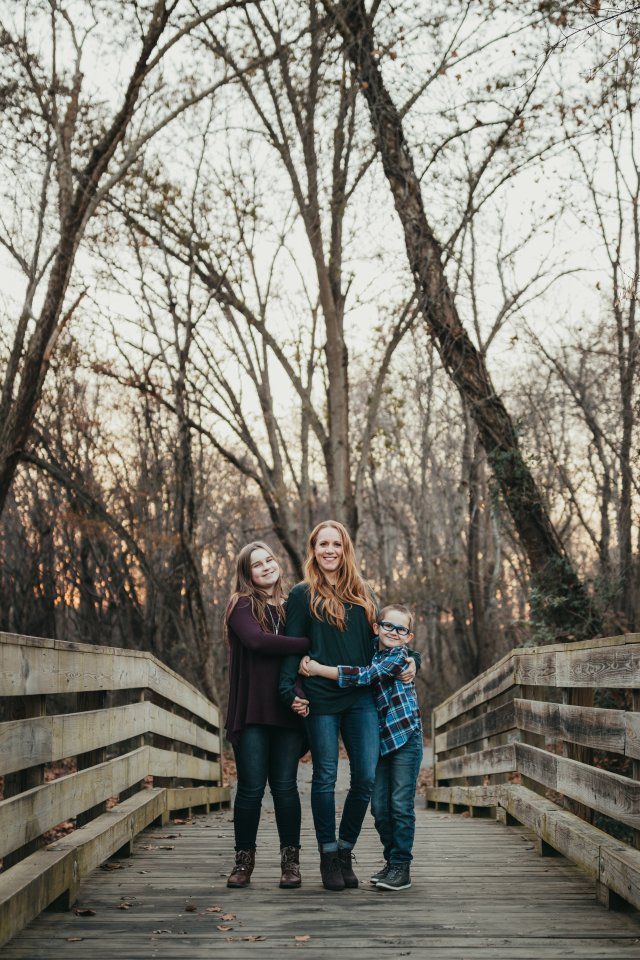
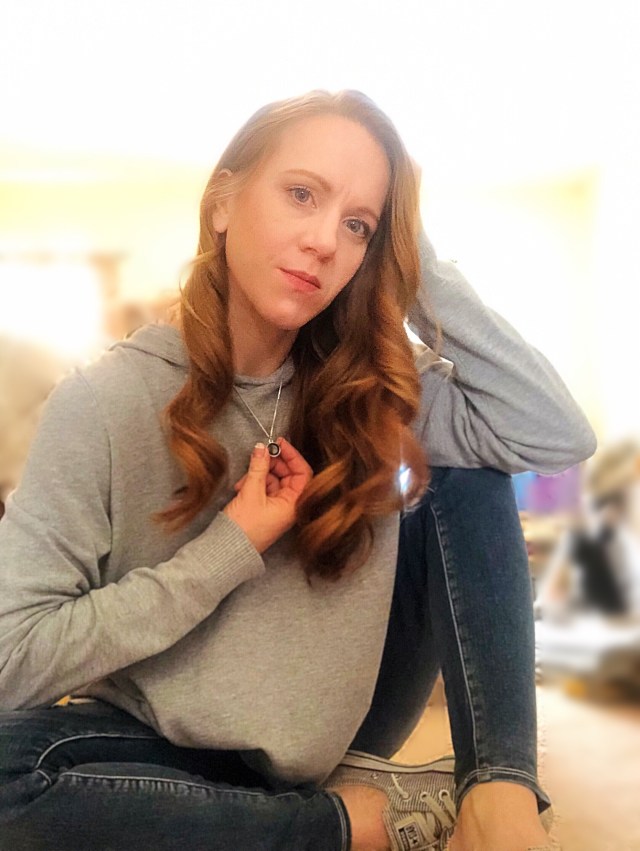
Photo Credit: Amy Adams Photography



 I had shed many tears in frustration over that shower in a years time, as recently as a week prior to adding the glossy sheen of new epoxy-acrylic paint, as I struggled over how to fix it. Like most things this year it boiled down to ripping it apart completely, starting fresh as if it had never happened, or allowing the chasm to be drawn back together, slowly, methodically, layer by layer building up the substrate and filling in the cracks, allowing the old to remain, to be rebuilt. Like most things this year, it was the latter in which I found healing and completion.
 Connection is the most precious gift we can give one another, it is a biological imperative. We long for it from birth, it feeds us physiologically, psychologically, and emotionally and if you are not sure that you agree just observe a mother and her baby, please watch the face of that child as their eyes meet and report your findings later. When those deep connections are severed we suffer, the feeling of disconnect a close associate of PTSD and C-PTSD. We spend tremendous amounts of time looking for other humans that spark that deep sense of comfort, of knowing, and of acceptance, the true connections that foster the conditions that allow us to be our fullest expressions of ourselves. In my own experience that connection has been a lot like the purge of a New Years’ tidying revolution a la Marie Kondo. I drag everything out of the closet and pile it up into a mess, while my mirror asks me very frankly if that particular item/idea/attitude sparks joy in my life. It is a mirror who’s arms are much stronger than my own, capable of holding space for me as I break into pieces and then softly gathers me back up and sits with me until the glue begins to stick again, the power and importance of which has been immeasurable as I have navigated all of this new territory.

 Finding Om in the OMG